From Tanker War to Today: Iran's Evolving Small Boat Doctrine in Hormuz
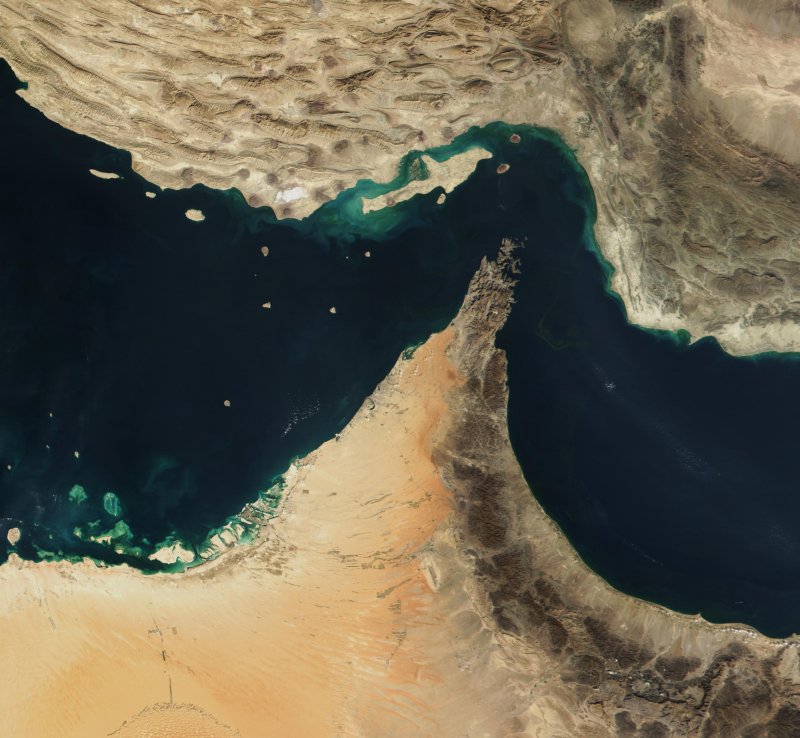
The Strait of Hormuz, a narrow waterway connecting the Persian Gulf to the open ocean, stands as one of the world's most critical maritime choke points. Annually, a significant portion of global oil supplies transits through this vital artery, making it a constant focal point for international security and a potential flashpoint for conflict. For decades, Iran has leveraged an asymmetric strategy centered around a formidable fleet of small boats, a doctrine forged in the crucible of the 1980s Tanker War and continually refined to address modern challenges. Understanding this evolving approach is crucial for comprehending the dynamics of any potential
Iran's Asymmetric War: Swarm Tactics in the Strait of Hormuz or wider
Iran oorlog Hormuz scenario.
A Legacy of Asymmetric Warfare: Lessons from the Tanker War
The foundations of Iran's small boat doctrine were laid during the brutal Iran-Iraq War (1980-1988), particularly during the phase known as the "Tanker War." Faced with a materially superior adversary and a powerful international naval presence, Iran's Islamic Revolutionary Guard Corps (IRGC) embraced asymmetric tactics. Small boats became the vanguard of this strategy, enabling Iran to harass shipping and inflict damage without engaging in direct, conventional confrontation.
During this period, Iran's small speedboats were extensively deployed within the Gulf and the Strait, employing rocket-propelled grenades (RPGs) and machine guns to attack vessels. Their operational strategy frequently involved utilizing the shallower, complex coastal waters, where the boats could launch swift attacks and then disappear among the "multitude of islands, islets, and coral reefs," effectively evading larger, less agile conventional warships. Beyond direct attacks, these versatile craft were also adapted for mine-laying, using rudimentary onboard cranes to sow chaos and disrupt shipping lanes.
One of the most notable tactics employed by Iran during the Tanker War was the "mass swarming" approach. This involved attacking targets with large numbers of small boats simultaneously, with some reports alleging engagements involving over forty individual vessels. While seemingly formidable, these early mass swarm attacks proved highly vulnerable to the superior air power of the United States. This susceptibility was starkly demonstrated in October 1987, when the IRGC reportedly retreated from a planned attack on Kuwaiti oil infrastructure in the face of overwhelming Saudi and U.S. air and sea strength. These early experiences provided invaluable, albeit painful, lessons that would shape Iran's future small boat strategy.
The Evolution of Doctrine: From Mass Swarm to Dispersed Asymmetry
Learning from the limitations exposed during the Tanker War, Iran's small boat doctrine has undergone significant evolution. Today, the IRGC commands a vast fleet, estimated at over 1,000 boats according to a 2004 Office of Naval Intelligence report, supplementing its conventional naval assets. The key doctrinal shift officially acknowledged by Iran is the move towards a more sophisticated "asymmetric" use of these small boats, moving beyond the brute force of simultaneous mass attacks from a single direction.
The new Iranian strategy emphasizes
dispersed swarming. Instead of gathering all boats for a concentrated attack, this approach involves 20 or more boats originating from multiple directions, encircling and overwhelming a target from various angles simultaneously. This dispersed tactic offers several strategic advantages:
* **Increased Survivability:** By spreading out, individual boats present smaller targets and are harder for a single defensive system to track and engage effectively.
* **Enhanced Target Saturation:** Attacking from multiple vectors can overload an adversary's defensive systems, making it difficult to prioritize and counter every threat.
* **Psychological Impact:** The sheer unpredictability and multi-directional threat can create significant fear and confusion among crews, complicating defensive maneuvers.
* **Exploiting Blind Spots:** Different angles of attack can exploit radar or visual blind spots on larger vessels.
This strategic refinement acknowledges the enduring superiority of conventional naval and air power, aiming to negate it through sheer numbers, speed, and tactical complexity. It represents a more nuanced approach to generating an advantage in a potential
Iran oorlog Hormuz scenario.
The Enduring Threat: Suicide Tactics and Geopolitical Tensions
While Iran's official doctrine may not explicitly detail suicide attacks, analysts, including those within the U.S. Navy, consider this a distinct possibility in any Iranian campaign to close the Strait of Hormuz. The effectiveness of suicide tactics, as demonstrated by various non-state actors against naval targets, makes it a potent, albeit extreme, option for inflicting significant damage with small, inexpensive platforms. The psychological impact alone could be immense, potentially causing international shipping to halt, even if temporarily, fulfilling a key Iranian objective of demonstrating control over the Strait.
The specter of these tactics looms large amidst ongoing geopolitical tensions. The relationship between the U.S. and Iran has been particularly fraught, as evidenced by past statements from leaders like former President Donald Trump. Trump’s warnings to Iran's Supreme Leader, Ayatollah Ali Khamenei, about a U.S. military buildup in the region and potential strikes if Tehran restarts its nuclear program, underscored the delicate balance of power. His assertion that Khamenei "should be very worried," coupled with threats of "very bad things" if Iran pursued nuclear ambitions, highlights the constant state of heightened alert.
In such a volatile environment, Iran's small boat doctrine serves as a vital component of its broader deterrent strategy. It provides a means to:
- Impose Costs: Even without closing the Strait, harassing commercial shipping can raise insurance costs, disrupt supply chains, and inflict economic pain on adversaries and the global market.
- Demonstrate Resolve: Aggressive maneuvers, even if contained, signal Iran's willingness to escalate and defend its interests.
- Asymmetric Response: In the face of overwhelming conventional military superiority, small boats offer a relatively inexpensive, difficult-to-counter capability for asymmetric retaliation.
- Negotiating Leverage: The implicit threat of disrupting global oil flow provides Iran with significant leverage in any diplomatic negotiations.
The potential for a single miscalculation or incident involving these small boats to spark a wider
Trump's Iran Threats: Could Hormuz Small Boats Spark a Conflict? remains a significant concern for regional stability.
Navigating the Waters: Analysis and Implications
The persistent evolution of Iran's small boat doctrine in Hormuz presents unique challenges for naval forces and commercial shipping alike. These small, fast, and numerous vessels are difficult to detect, track, and differentiate from regular traffic in a congested waterway. For larger, conventional warships, engaging a swarm of agile small boats presents a complex tactical problem involving rules of engagement, minimizing collateral damage, and effective resource allocation.
From an analytical perspective, Iran's small boat strategy is a highly rational response to its strategic environment. It's cost-effective, leverages geographic advantages, and exploits potential weaknesses in a conventional military's response mechanisms. For nations operating in the Strait, key considerations include:
- Enhanced Surveillance: Investing in advanced radar, electro-optical/infrared (EO/IR) systems, and unmanned aerial vehicles (UAVs) to detect small surface contacts.
- Layered Defenses: Developing multi-tiered defensive systems, including close-in weapon systems (CIWS), naval guns, and potentially directed energy weapons, to counter swarm attacks.
- Rules of Engagement Clarity: Establishing clear and robust rules of engagement for naval forces operating in the Strait to enable timely and effective responses while avoiding unnecessary escalation.
- International Cooperation: Fostering strong communication and coordination among international naval presences to create a unified and deterrent posture.
The constant presence of these capabilities means that even amidst diplomatic efforts and potential direct talks, like those envisioned between special envoy Steve Witkoff and Iran's foreign minister Abbas Araghchi, the underlying military readiness, particularly concerning small boats, remains paramount.
Conclusion
From the experimental skirmishes of the Tanker War to the refined asymmetric dispersed swarming tactics of today, Iran's small boat doctrine in the Strait of Hormuz has undergone a significant transformation. It represents a flexible, cost-effective, and potentially devastating tool in Iran's strategic arsenal, capable of disrupting global energy markets and challenging even the most technologically advanced navies. As geopolitical tensions ebb and flow, the thousands of small boats patrolling the critical waters of the Strait of Hormuz serve as a constant reminder of the volatile dynamics that could lead to an
Iran oorlog Hormuz and the critical importance of understanding Iran's evolving asymmetric warfare capabilities.