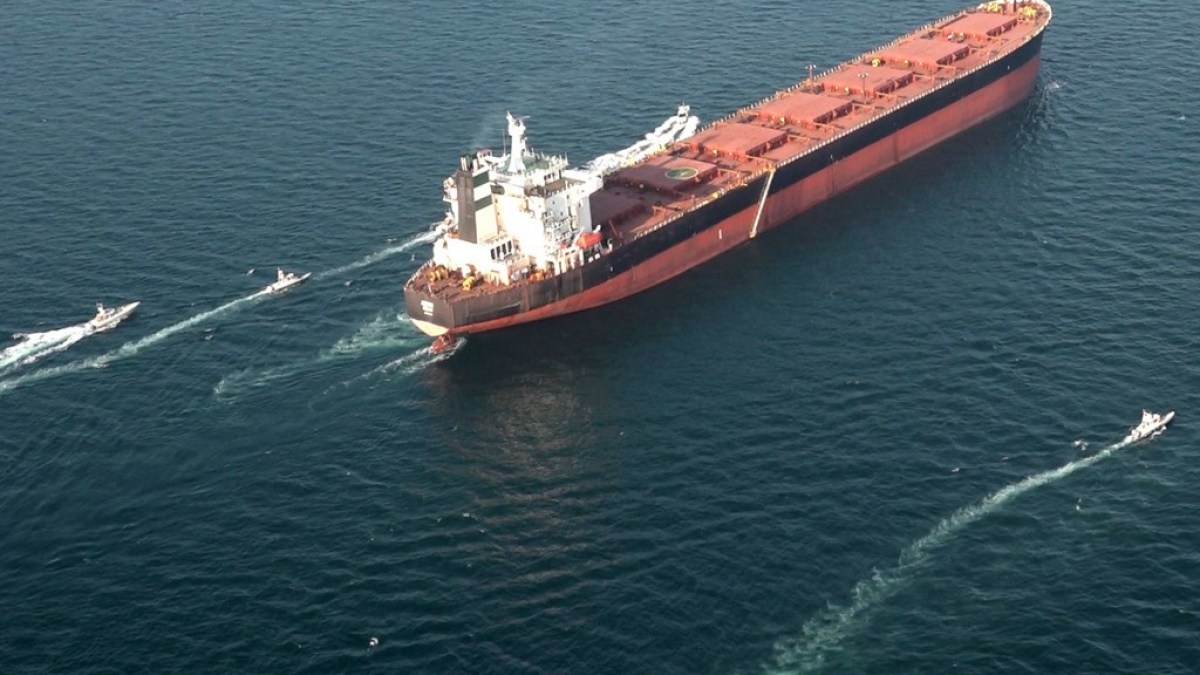
The Strait of Hormuz, a narrow maritime chokepoint through which a significant portion of the world's oil supply transits, has long been a flashpoint for geopolitical tensions. Recent bellicose rhetoric from former President Donald Trump, directly threatening Iran's leadership and warning of severe consequences if Tehran pursues its nuclear ambitions, casts a fresh, ominous shadow over this critical waterway. Compounding this diplomatic standoff is Iran's unique naval strategy, centered on a vast fleet of small boats operated by the Islamic Revolutionary Guard Corps (IRGC). The convergence of these factors raises a critical question: Could a seemingly minor incident involving these small, agile vessels spark a devastating Iran oorlog Hormuz?
The Strait of Hormuz: A Strategic Chokepoint on the Brink
Often dubbed the "jugular vein" of the global energy market, the Strait of Hormuz connects the Persian Gulf to the Arabian Sea, serving as the only sea passage from the oil-rich states of the Gulf to the open ocean. Approximately 20% of the world's total petroleum liquids consumption, and about one-third of all seaborne traded oil, passes through its waters daily. Any disruption here would send shockwaves through the global economy, causing oil prices to skyrocket and triggering immense instability.
This strategic significance makes Hormuz a natural theater for geopolitical brinkmanship. For decades, Iran has viewed the Strait as both a vital economic artery and a potential leverage point against its adversaries. The historical context of the 1980s "Tanker War" during the Iran-Iraq conflict provides a chilling precedent, demonstrating Iran's willingness to target shipping in the Strait and highlighting the potential for maritime incidents to escalate into broader confrontations. Understanding this history is crucial when assessing the current potential for an Iran oorlog Hormuz.
Iran's Asymmetric Naval Doctrine: The Potent Threat of Small Boats
While the U.S. Navy boasts an unparalleled fleet of aircraft carriers, destroyers, and submarines, Iran has adopted an asymmetric warfare strategy designed to challenge a technologically superior adversary. At the heart of this strategy lies the IRGC's formidable fleet of small boats, estimated to exceed 1,000 vessels. These aren't conventional warships; they are fast, agile, and purpose-built for harassment, interdiction, and potentially, direct attacks in the confined waters of the Persian Gulf and the Strait of Hormuz.
Lessons from the Tanker War: From Mass Swarms to Dispersed Tactics
The 1980s Tanker War offered Iran valuable, albeit costly, lessons in small boat operations. During this period, Iranian forces extensively used small speedboats armed with rocket-propelled grenades (RPGs) and machine guns to harass and damage tanker traffic. They leveraged the Strait's unique geography—its shallow, coastal waters, and myriad islands, islets, and coral reefs—to launch swift attacks and then disappear, making it difficult for larger vessels to counter them. Iran also employed these boats for mine-laying, using simple onboard cranes to deploy explosives.
Initially, Iran favored "mass swarming tactics," attempting to overwhelm targets with dozens of boats attacking simultaneously from the same direction. However, as documented by the Office of Naval Intelligence, these tactics proved highly vulnerable to U.S. air power, leading to significant losses. This susceptibility was a major factor in the IRGC's decision to retreat from a planned attack on Kuwaiti oil infrastructure in 1987 when faced with overwhelming U.S. and Saudi air and sea strength.
Learning from these shortcomings, Iran officially adopted a new, more sophisticated doctrine of Iran's Asymmetric War: Swarm Tactics in the Strait of Hormuz. This evolved strategy moves away from concentrated, predictable attacks towards a "dispersed swarming" approach, involving 20 or more boats attacking from multiple, unexpected directions. This change aims to complicate defensive measures, create confusion, and maximize the chances of penetrating a target's defenses. The effectiveness of this updated doctrine could significantly alter the dynamics of any potential Iran oorlog Hormuz.
The Shadow of Suicide Attacks
While neither Iran's traditional mass swarming nor its newer asymmetric procedures explicitly mention suicide attacks, the possibility remains a chilling concern for military analysts. Suicide tactics, though extreme, have proven relatively effective in asymmetric warfare compared to small-arms attacks, particularly when employed by determined actors. Given the effectiveness demonstrated by terrorist groups in various contexts, it is not unreasonable to assume that Iran, under extreme pressure, might consider using small boats in suicide attacks against tankers or other vessels in a concerted campaign to close the Strait of Hormuz. This scenario underscores the unpredictable and potentially devastating nature of a confrontation in these waters.
To delve deeper into this evolution, consider reading about From Tanker War to Today: Iran's Evolving Small Boat Doctrine in Hormuz, which details the historical shifts in Iran's naval approach.
Trump's Rhetoric and the Escalation Risk
Against this backdrop of Iran's unique naval capabilities, former President Trump's recent threats add another layer of volatility. Trump publicly warned Iran's Supreme Leader, Ayatollah Ali Khamenei, that he "should be very worried" about a U.S. military buildup in the region. He hinted at new strikes if Iran attempted to restart its nuclear program, stating, "We said, 'You do that, we're going to do very bad things to you.'" This aggressive stance, while potentially intended as a deterrent, could also be perceived as a direct provocation, raising the stakes in an already tense environment.
The former President's "bad things would happen" warning, coupled with previous U.S. strikes on Iranian nuclear facilities, creates a highly combustible situation. While efforts for direct talks with Iran's foreign minister, Abbas Araghchi, were reported, the underlying rhetoric of threats and potential military action remains. This volatile mix raises serious concerns about how a minor incident, perhaps involving an Iranian small boat perceived as harassing U.S. or allied shipping, could rapidly escalate into a full-blown Iran oorlog Hormuz. The risk of miscalculation, where one side's defensive action is interpreted as an aggressive act by the other, is alarmingly high in such an atmosphere.
Navigating the Dangerous Waters: Preventing a Hormuz Conflict
Preventing a catastrophic Iran oorlog Hormuz requires a delicate balance of deterrence, diplomacy, and de-escalation strategies. For international navies operating in the Strait, key considerations include:
- Enhanced Surveillance: Constant monitoring of Iranian small boat movements is critical to detect and preempt any hostile actions or suspicious deployments.
- Clear Rules of Engagement: Navies must have clear, consistent, and well-understood rules of engagement to respond to harassment or attack, minimizing misinterpretation.
- Non-Lethal Deterrence: Employing non-lethal measures, such as warning shots, acoustic hailing devices, or water cannons, can often de-escalate situations without resorting to deadly force.
- Diplomatic Channels: Despite bellicose rhetoric, maintaining open lines of communication between military and diplomatic leaders is paramount to prevent misunderstandings from spiraling out of control.
- Strategic Patience: Responding to provocations with restraint, rather than immediate escalation, can often defuse tension and allow for diplomatic solutions to emerge.
The global community has a vested interest in maintaining the free flow of commerce through Hormuz. Any conflict would not only devastate the region but also cripple the world economy, highlighting the urgency of diplomatic engagement over military confrontation.
The potential for an Iran oorlog Hormuz, sparked by the unique tactical capabilities of Iranian small boats and inflamed by heightened political rhetoric, remains a pressing concern. The IRGC's evolving asymmetric naval doctrine, combined with the strategic importance of the Strait and the demonstrated willingness of major powers to engage in brinkmanship, creates a truly dangerous environment. Averting a conflict demands not only robust deterrence but also astute diplomacy and a profound understanding of the interconnected risks. The world watches, hoping that prudence will prevail over provocation in these critical waters.